
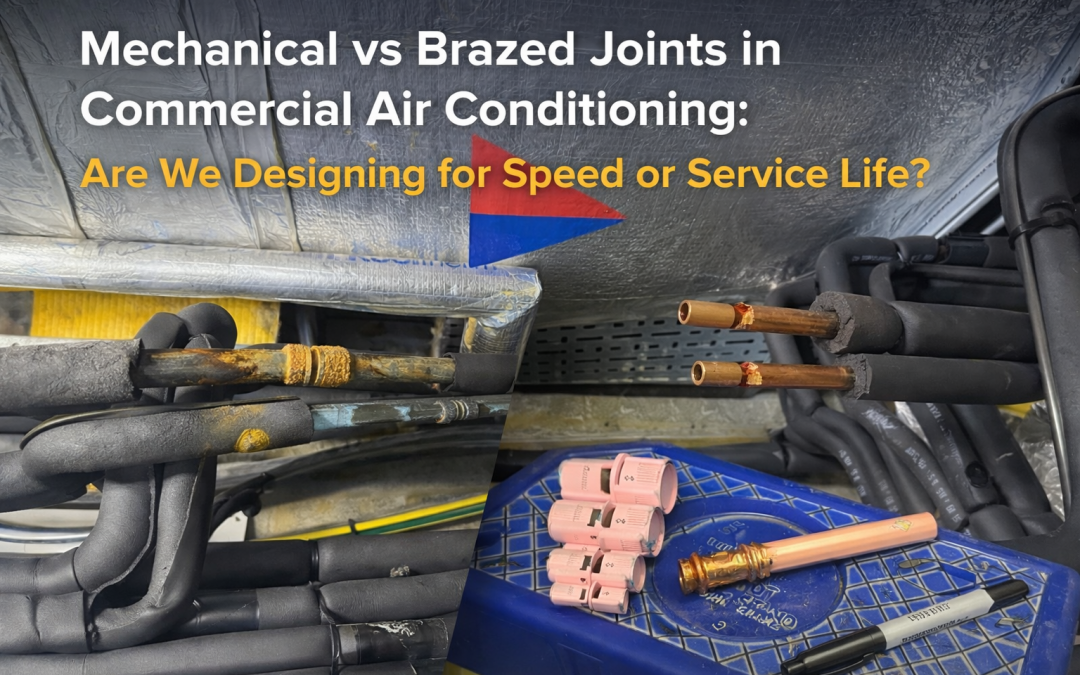
During a recent commercial air conditioning call-out, our engineers were asked to investigate a system that was not performing correctly. Initial checks identified a refrigerant shortage, so a pressure test was carried out to confirm the integrity of the system before any further work was undertaken.
During this investigation, the underlying issue became clear.
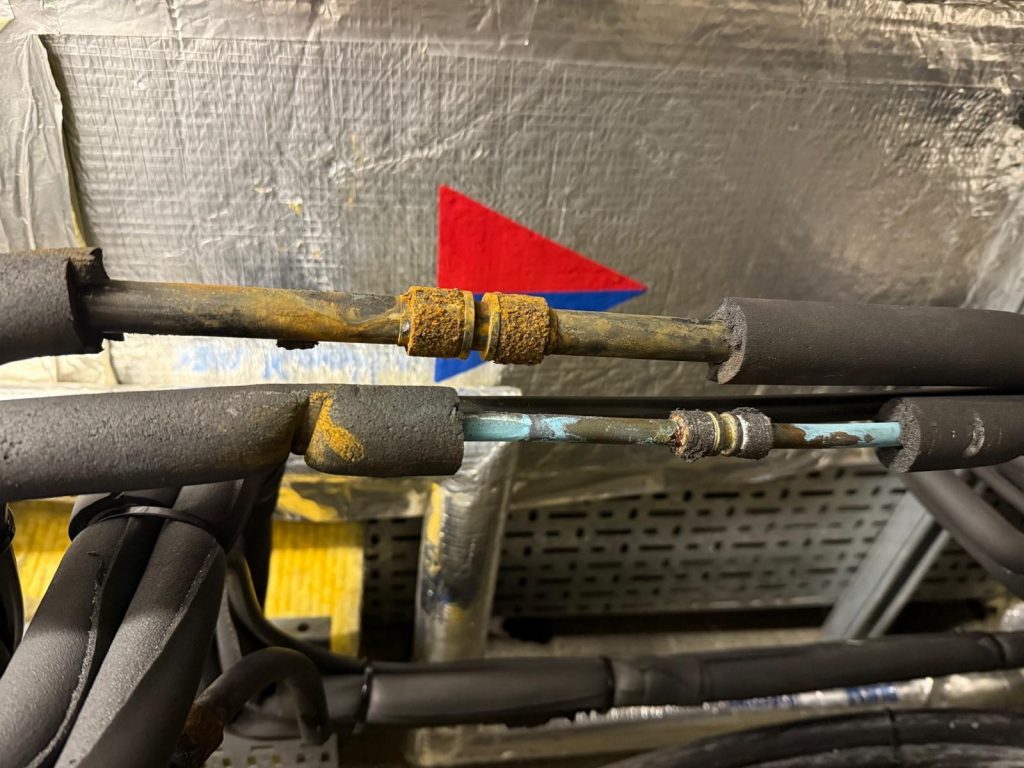
Several mechanical fittings on the refrigerant pipework had deteriorated over time. Corrosion had formed around the joints, eventually leading to refrigerant leakage and reduced system performance. The fittings had passed original commissioning and pressure testing, but environmental conditions and age had gradually compromised their long-term reliability.
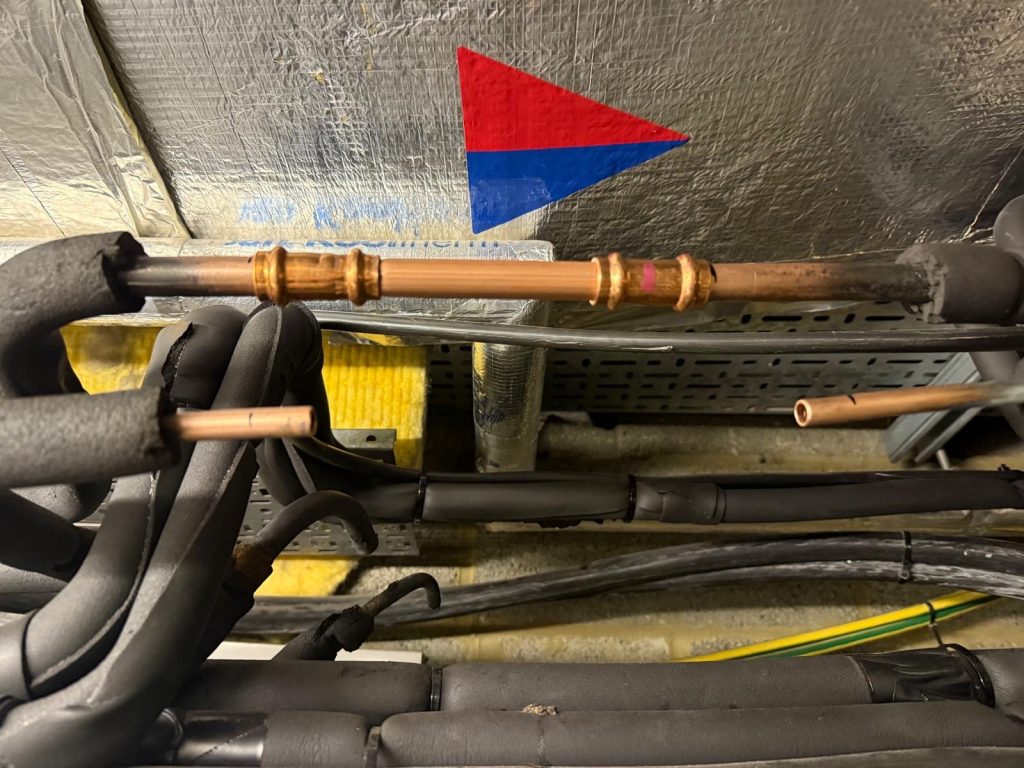
To restore the system, the failed joints were replaced using new press-style fittings, allowing the commercial air conditioning system to be returned to service safely and efficiently. However, the job raised a wider question — one that feels increasingly relevant across commercial HVAC and air conditioning installations.
Are Mechanical Refrigeration Fittings a Long-Term Solution?
Mechanical press fittings are now widely used in commercial air conditioning and refrigeration systems. Their advantages are well established:
- Faster installation on commercial projects
- Reduced hot works risk in occupied buildings
- Consistent joint quality when installed correctly
- No need for nitrogen purging.
For many commercial air conditioning installations, these benefits are significant. But when systems are expected to operate reliably for 15 + years, it raises an important question:
Are we prioritising installation speed over long-term service life?
Failure Over Time, Not at Installation
This issue was not caused by poor workmanship. The fittings had been installed correctly, pressure tested, and had operated as intended.
The failure occurred years later.
In commercial environments , refrigerant pipework is routinely exposed to fluctuating temperatures, moisture ingress, insulation breakdown, vibration, and restricted airflow. Over time, these factors can affect mechanical seals in ways that are not always visible during routine commercial air conditioning maintenance.
So perhaps the more relevant questions are:
- How do mechanical fittings perform after 10–20 years in commercial environments?
- How does corrosion impact long-term refrigerant containment?
- Are some jointing methods better suited to concealed or critical pipework?
Revisiting Brazing in Commercial Air Conditioning Systems
Traditional brazed joints have been used in commercial refrigeration and air conditioning systems for decades. When installed correctly, brazing creates a permanent metallurgical bond rather than relying on a mechanical seal.
Many older commercial air conditioning systems still operating today rely heavily on brazed refrigerant pipework — often with fewer joint-related failures over time.
This leads to another important consideration:
Are we likely to revisit the same commercial systems in 10–15 years’ time to replace aging mechanical joints?
This isn’t to suggest that brazing should always replace press fittings. Hot works introduce additional planning, permits, and safety considerations, particularly in live commercial environments. But it does highlight the importance of selecting jointing methods based on lifecycle performance, not just installation convenience.
Is a Hybrid Approach the Future of Commercial HVAC?
Rather than framing this as press fittings versus brazing, perhaps the industry discussion should focus on application-led system design:
- Should concealed or inaccessible refrigerant pipework default to brazed joints?
- Are press fittings better suited to accessible plant rooms and serviceable areas?
- Do commercial air conditioning maintenance strategies need to evolve alongside modern installation methods?
As clients expect longer asset lifespans and greater system resilience, these design decisions play an increasingly important role in long-term performance.
Opening the Conversation
At Aircon Services, we spend as much time repairing and maintaining commercial air conditioning systems as we do installing them. Seeing how systems age in real operating environments offers valuable insight into the long-term impact of design and installation choices.
This isn’t about criticising mechanical fittings — it was about questioning whether long-term reliability is always given the same weight as speed and efficiency.
We’d be interested to hear from others working in commercial HVAC:
- What are you seeing on older mechanical fitting on commercial air conditioning systems?
- Have you encountered similar long-term joint failures?
- Do you believe brazing will continue to be used in commercial applications?
The future of commercial air conditioning won’t be defined by one method alone — but by informed decisions that balance safety, performance, and longevity.
If you’d like to discuss commercial air conditioning maintenance, refurbishment, or system reliability, our team is always happy to share insight.
FAQ – Commercial Air Conditioning Pipework & Jointing Methods
What causes refrigerant leaks in commercial air conditioning systems?
Refrigerant leaks in commercial air conditioning systems are often caused by joint degradation, corrosion, vibration, insulation breakdown, or long-term exposure to moisture and temperature changes. While systems may pass commissioning and pressure testing, leaks can develop years later as components age.
Are press fittings reliable for commercial air conditioning installations?
Press fittings can be reliable when installed correctly and used in appropriate environments. They offer fast installation and reduced hot works risk, making them popular on commercial projects. However, their long-term performance can be affected by corrosion, accessibility, and environmental conditions within plant rooms.
How long do mechanical press fittings last in commercial HVAC systems?
The lifespan of mechanical press fittings varies depending on installation quality, environment, insulation condition, and exposure to moisture or vibration. In some commercial settings, fittings may perform well for many years, while in harsher environments deterioration can occur sooner.
Are brazed joints better than press fittings for refrigerant pipework?
Brazed joints create a permanent metallurgical bond and have a long track record in commercial refrigeration and air conditioning systems. They can offer excellent long-term reliability, particularly in concealed or critical pipework, but require hot works controls and skilled installation.
Should commercial air conditioning systems use a mix of brazed and press fittings?
Many engineers now favour a hybrid approach. Brazed joints may be more suitable for concealed or inaccessible pipework, while press fittings can work well in accessible plant rooms where future inspection and maintenance are possible.
How can businesses reduce the risk of refrigerant leaks over time?
Regular commercial air conditioning maintenance, insulation inspections, leak detection checks, and proactive refurbishment planning all help reduce long-term refrigerant loss. Design decisions made at installation also play a key role in system longevity.