At Aircon Services, our engineers come across all sorts of refrigeration and air conditioning faults. Frozen evaporators, blocked drains, failed fan motors and refrigerant issues are all part of the job.
But every now and then we find something that leaves even our most experienced engineers scratching their heads.
This week was one of those occasions.
A Frozen Evaporator
Our engineer attended a call-out to a refrigerated room that had stopped performing correctly. On arrival, the evaporator coil was completely frozen solid with ice.
A frozen evaporator is usually a symptom of another issue, such as:
- Poor airflow across the coil
- Fan motor problems
- Defrost system failures
- Refrigerant faults
- Blocked filters or coils
The first step was to safely defrost the evaporator and investigate the root cause.
As the ice began to melt away, something very unusual started to appear.
Something We’d Never Seen Before
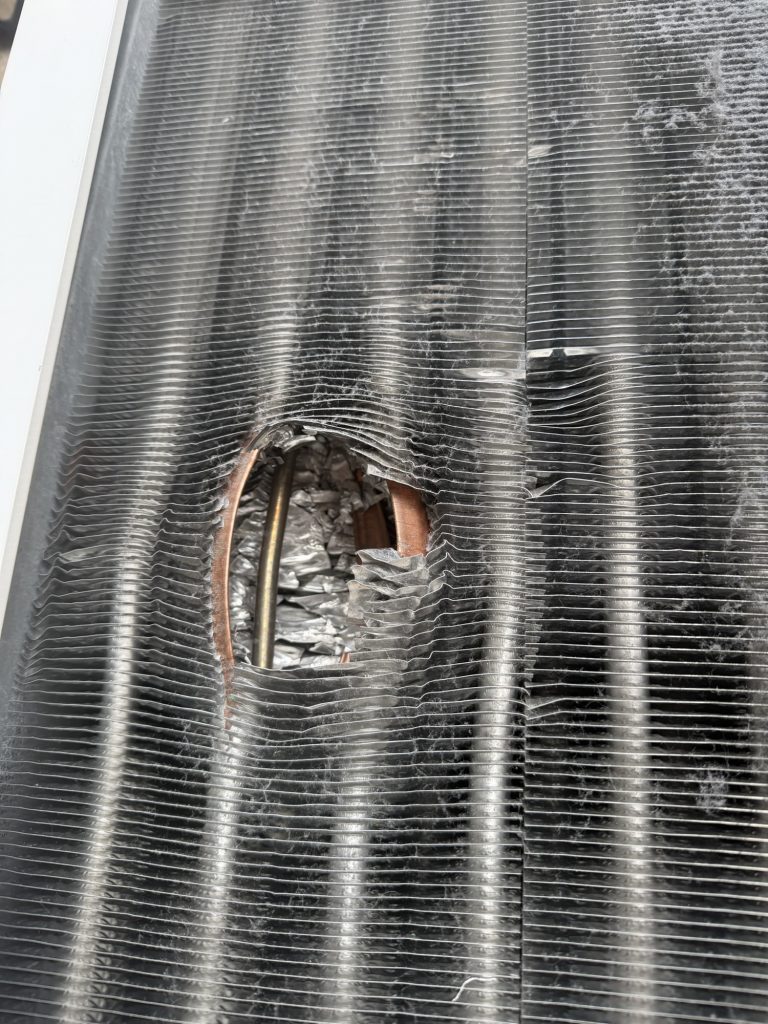
Hidden deep inside the evaporator coil was a large mass of ice that had formed between the tubes and fins.
At first glance, it looked as though one of the copper tubes had burst into three separate pieces. The damage appeared so severe that we immediately expected to find a refrigerant leak.
However, after closer inspection, we realised something even stranger had happened.
The expanding ice had actually crushed and flattened three copper tubes inside the evaporator coil.
Not dented.
Not kinked.
Completely flattened.
The force generated by the expanding ice had deformed the copper tubing to the point where it looked as though the tubes had split apart.
The Most Surprising Part
Despite the severe damage, the coil was still holding pressure.
There were no signs of refrigerant leakage.
The refrigeration system was still operating.
Anyone who works with refrigeration equipment knows how remarkable that is. Copper tubing is relatively soft, but for ice expansion to completely flatten multiple tubes without rupturing them is something we have never encountered before.
It is a powerful reminder of just how much force expanding water can generate when it freezes.
Why It Matters
This fault highlights the importance of investigating the cause of icing rather than simply removing the ice and putting the system back into operation.
If excessive ice build-up is ignored, it can:
- Restrict airflow
- Reduce cooling performance
- Increase energy consumption
- Damage evaporator coils
- Lead to refrigerant leaks
- Cause costly system downtime
In this case, the coil had suffered significant physical damage despite the system continuing to run.
Another Day, Another Lesson
After many years maintaining refrigeration and air conditioning systems, we still occasionally come across faults we’ve never seen before.
This was certainly one of them.
The photographs below show the damage after the evaporator had been defrosted. While we’ve seen coils split due to freezing in the past, this is the first time we’ve witnessed ice physically flatten multiple copper tubes without causing a leak.
It’s a reminder that refrigeration systems can sometimes surprise even the most experienced engineers.
If your cold room, refrigeration system or air conditioning equipment is showing signs of icing, reduced performance or unusual operation, early intervention can often prevent a much more expensive repair later on.
Learn more about our commercial air conditioning servicing and planned maintenance, or contact our engineers if your system is icing or losing performance.
Aircon Services provides refrigeration, air conditioning and HVAC maintenance throughout London, Buckinghamshire, Oxfordshire and the surrounding areas.
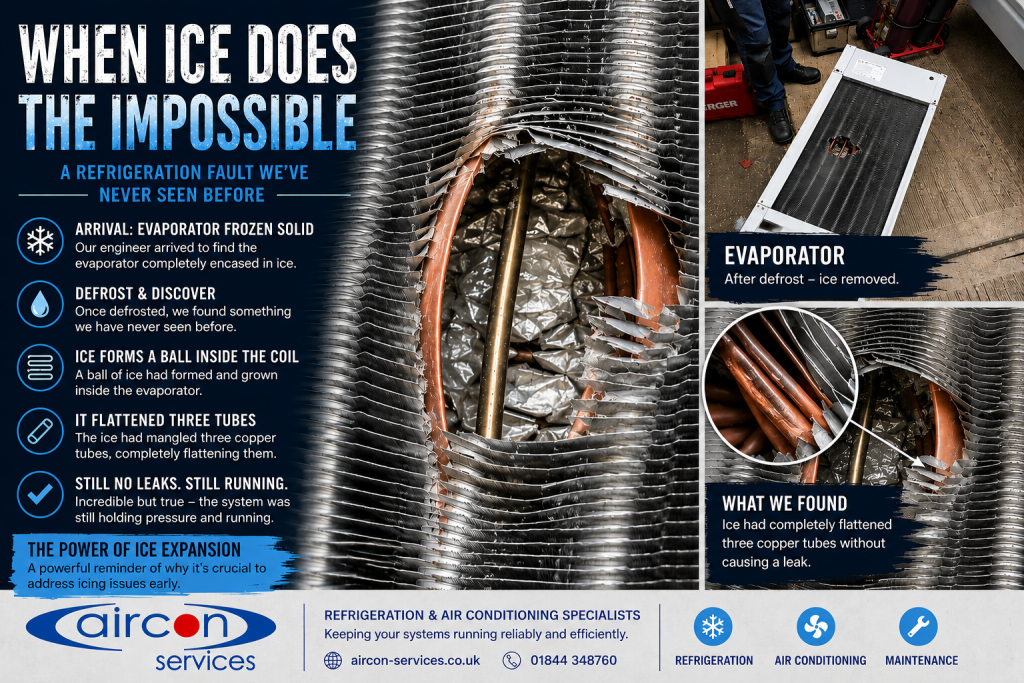
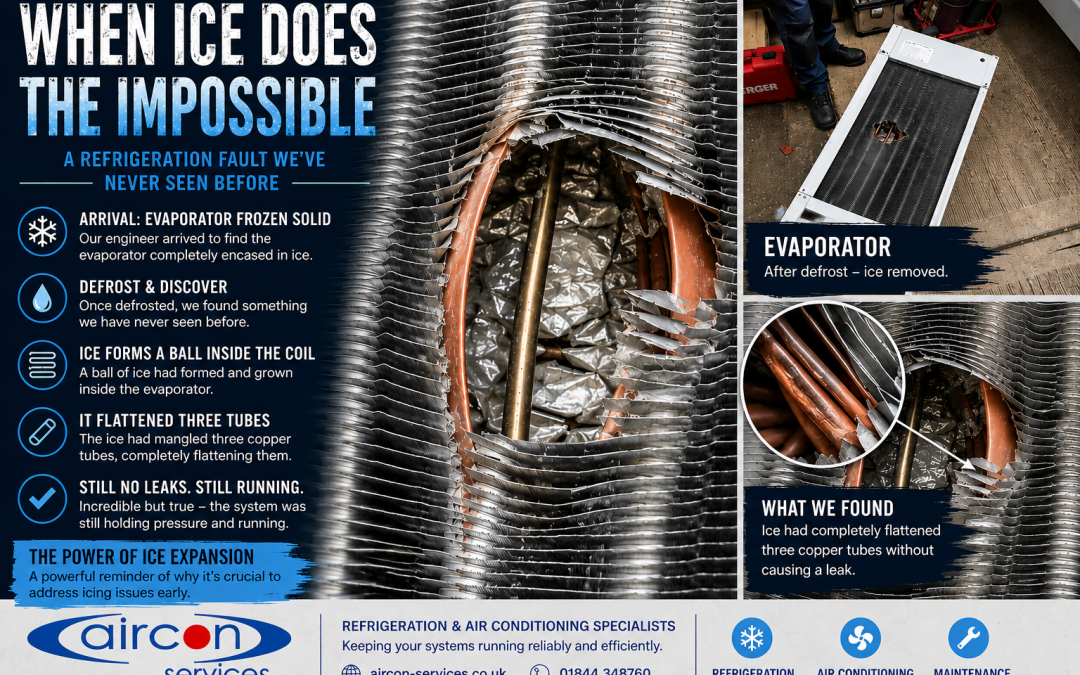
A refrigeration fault we’ve never seen before – ice expansion inside this evaporator flattened three copper tubes without causing a refrigerant leak, and the system was still running.